Physical Address
304 North Cardinal St.
Dorchester Center, MA 02124
Physical Address
304 North Cardinal St.
Dorchester Center, MA 02124

Discover Santiago de Compostela’s urban layout and heritage on this 2-hour guided tour, exploring historic sites, symbols, and social history in small groups.
 1 / 7
1 / 7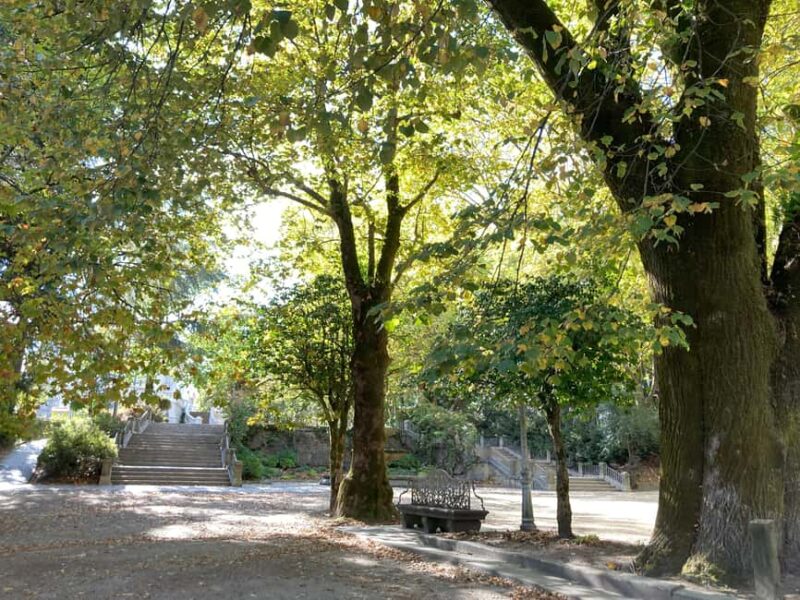 2 / 73 / 7
 4 / 7
4 / 7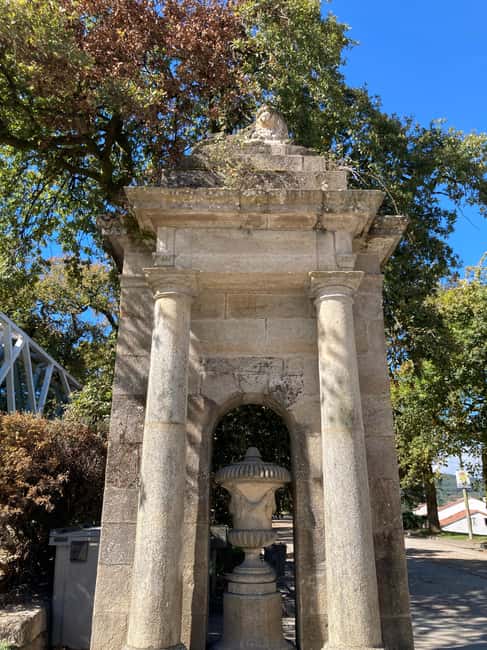 5 / 7
5 / 7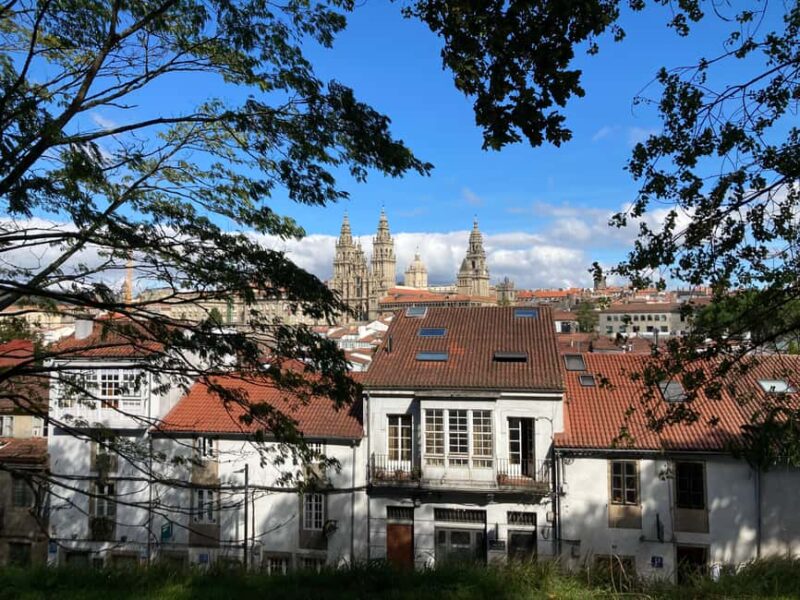 6 / 7
6 / 7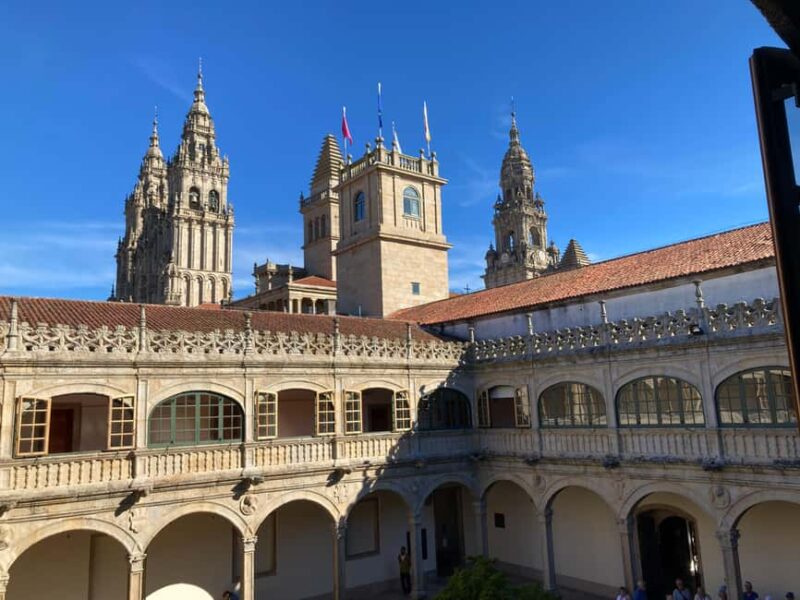 7 / 7
7 / 7
This 2-hour guided tour begins at As dúas Marías, the designated meeting point, and moves to the Paseo Central da Alameda. The Alameda is a key site, often called the city’s green lung, and represents Santiago’s 19th-century urban modernization effort. Here, the guide explains how this park was designed as a leisure space for citizens and how it evolved into the 20th century.
The walk through the Alameda highlights how urban planning reflects social changes. It’s a chance to see the city’s green spaces as more than just parks—they are integral to understanding Santiago’s growth and transformation.
Interested in history? Here are other past-focused experiences we've examined in Santiago De Compostela
Walking into the historic quarter, the tour emphasizes how the city’s buildings are its own historical documents. In streets like Rúa do Vilar, viewers encounter ‘roof peepholes’ and marks of ownership carved into stone. These include shields, inscriptions, and emblems connected to institutions like the Cathedral’s Cabildo, University, Hospital of the Catholic Monarchs, and San Martín Pinario Monastery.
This segment offers a fascinating look at how symbols reveal social affiliations and the history of property. The guide aids in understanding the significance of each emblem, turning the streets into visual stories of Santiago’s social fabric.
Next, the tour visits Platerías, a 12th-century Romanesque façade that presents a sculptural puzzle due to its fragmentation. The vicissitudes of history have left it disjointed, making it an intriguing site for interpretation.
This stop shows how architecture bears the marks of time, with the sculptural elements offering clues about the construction’s original form and subsequent modifications. The Romanesque style here is a perfect example of Santiago’s medieval roots.
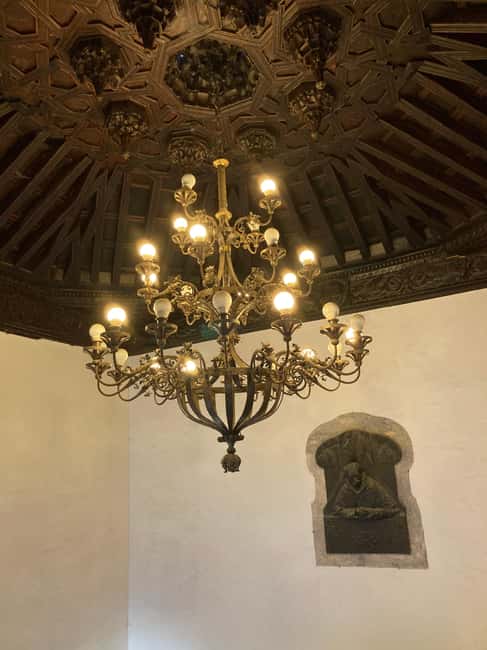
The Pazo de Fonseca, linked to the origins of the University, is a Renaissance building that features a stunning cloister. If available, the tour includes a visit to the Artesonado Room and the upper cloister, both showcasing architectural details from the Renaissance period.
This site provides insight into academic traditions and patronage linked to Santiago’s educational history. The cloister serves as a peaceful space that contextualizes the city’s role as a center of learning.
More Great Tours Nearby
The tour culminates at Plaza del Obradoiro, where four emblematic buildings converge. Visitors see the baroque façade of the Cathedral, the neoclassical Town Hall with its Santiago Matamoros sculpture, the old Hospital of the Catholic Monarchs, and the University Rectorate, with its Romanesque portal reminiscent of the Portico of Glory.
This square encapsulates Santiago’s architectural diversity and social history, serving as a visual summary of the city’s evolution through different styles and functions.
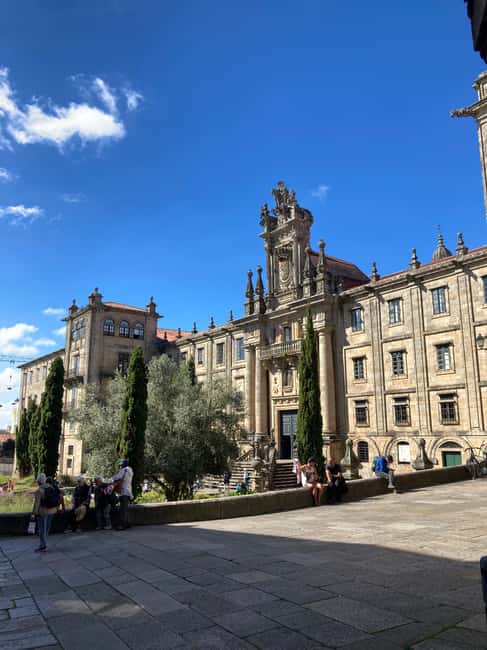
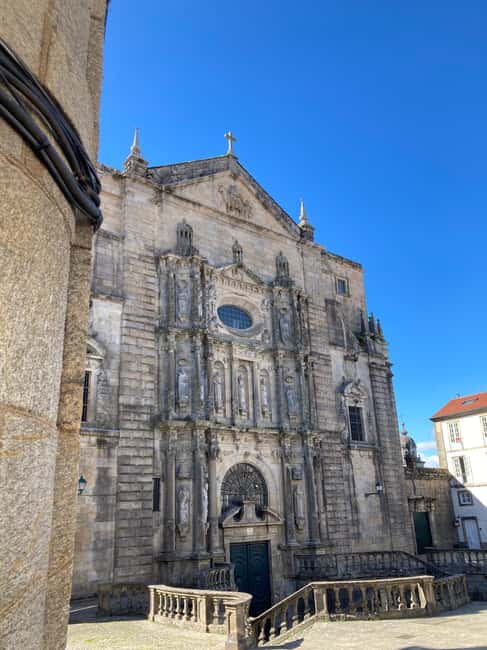
The tour ends at the San Martín Pinario Monastery, which was transformed in the 19th century following disendowment. Its spaces, once monastic, now serve various cultural functions, reflecting changes in social and religious institutions.
This site illustrates how monastic spaces have adapted over time, turning from religious centers into multifunctional cultural venues. It adds depth to understanding the city’s historic resilience and modern reuse of heritage buildings.
This small-group tour is led by a professional guide who offers insights in both Spanish and English. It is wheelchair accessible and designed for an attentive, reflective experience rather than just sightseeing.
The itinerary includes stops at As dúas Marías, Alameda, Rúa do Franco, Palace of Fonseca, Praza do Obradoiro, Cathedral, San Martín Pinario, and Praza de Cervantes. Each segment is timed to provide meaningful exploration without feeling rushed, with a total duration of 2 hours.
Booking offers full flexibility: travelers can cancel up to 24 hours in advance for a full refund, or reserve now and pay later for greater flexibility.
This tour stands out by combining urban analysis, social history, and symbolic interpretation. It’s suited for those interested in understanding Santiago beyond its monuments, exploring what the city’s layout and symbols reveal about its identity.
The personalized size (limited to 10 participants) ensures engagement with the guide and a more intimate experience. The bilingual format makes it accessible, while the focus on interpretation offers a deeper appreciation of Santiago’s layers of history.
Ideal for history enthusiasts, students of architecture, or curious travelers seeking a thoughtful exploration of Santiago de Compostela. It’s equally suited for visitors who enjoy reflection and interpretation over traditional monument-hopping.
Those preferring a quick overview of the city’s highlights may find this approach more detailed than necessary, but for those who want to see Santiago as a living document, this tour provides valuable insights.
This guided experience offers a balanced mix of architectural appreciation and social history. It is well-paced and thoughtfully curated, with a focus on understanding how Santiago’s urban design and symbols reflect its identity.
While not exhaustive, the 2-hour format allows for focused exploration without overwhelming. The small group size and bilingual guides make it a comfortable, engaging option for a wide range of visitors.
This tour is a rich, interpretive journey into Santiago’s urban fabric and heritage significance, perfect for those eager to see beyond the surface.
What languages are the tours conducted in?
The tours are conducted in Spanish and English, catering to a bilingual audience.
Is the tour suitable for people with mobility challenges?
Yes, the tour is wheelchair accessible, making it suitable for participants with mobility needs.
How long does the tour last?
The tour lasts approximately 2 hours, covering multiple key sites in the historic center.
Where does the tour begin and end?
It begins at As dúas Marías and ends at Praza do Obradoiro.
What are some notable stops along the route?
Stops include Alameda, Rúa do Vilar, Platerías façade, Pazo de Fonseca, Praza del Obradoiro, and San Martín Pinario.
Can I cancel my booking?
Yes, cancellations are accepted up to 24 hours in advance for a full refund.
Is this tour suitable for those interested in social history?
Absolutely, the tour emphasizes connecting monuments with social history and interpreting symbols.
What makes this tour different from other Santiago tours?
Its focus on urban interpretation, symbolism, and social context sets it apart from more typical monument-focused sightseeing options.