Physical Address
304 North Cardinal St.
Dorchester Center, MA 02124
Physical Address
304 North Cardinal St.
Dorchester Center, MA 02124


Discover Pompeii’s history and architecture with this self-guided audio tour. Learn about its rise, fall, and rediscovery for just $19.99.
Exploring Pompeii with the Self-Guided Tour: The Rise, Fall, and Rediscovery of Pompeii offers a detailed and flexible way to experience this UNESCO World Heritage Site. Priced at $19.99 per person, the tour provides lifetime access in English via the VoiceMap app, making it a practical choice for travelers who prefer to explore at their own pace. The tour lasts roughly 1 hour 15 minutes to 1 hour 30 minutes, and while it doesn’t include entry tickets, it guides you through the city’s most notable locations, which require a ticket purchased separately for €19.
The tour is especially suited for those who want an in-depth look at Pompeii’s history without the constraints of a traditional guided group. It’s designed for independent explorers comfortable with using an app, and it’s ideal for travelers who enjoy flexible schedules. With positive reviews, including a perfect score of 5 out of 5, this tour stands out for its knowledgeable narration and detailed commentary.
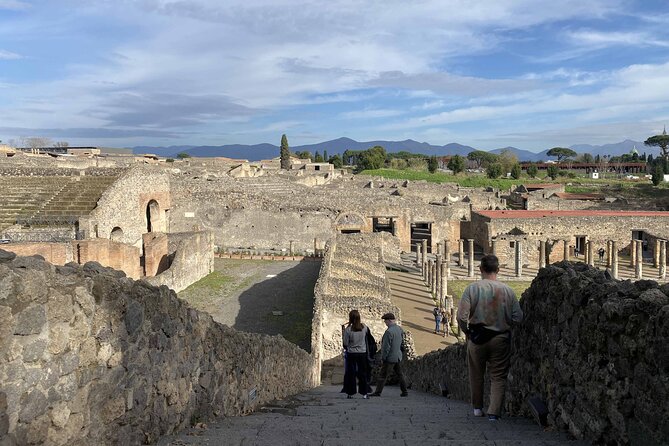
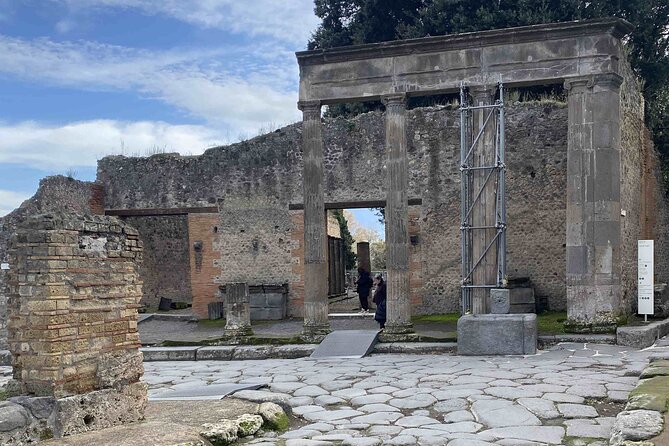
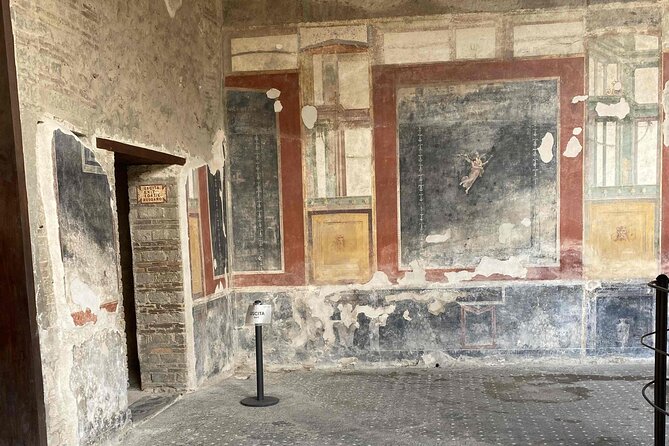
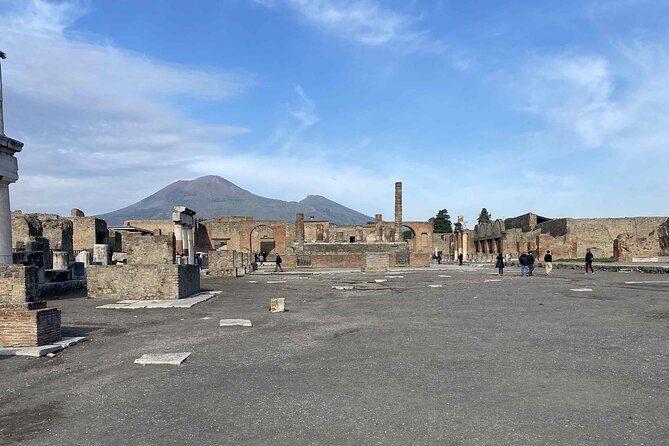
The tour begins at Porta Marina, one of Pompeii’s main entrances, setting the scene for your journey into the ancient city. This point marks the start of a comprehensive walk through Pompeii’s archaeological area, highlighting its vibrant life before the eruption. From here, visitors are led through the city’s central streets and important landmarks, all narrated by the expert voice guiding you through the history.
Although not a stop itself, Porta Marina’s significance lies in its role as the gateway to Pompeii’s bustling streets, giving a sense of arrival into a city that once thrived. The tour’s flexible format allows you to start at your convenience within the park’s opening hours, from 9 AM to 7 PM (April to October). Remember, entry tickets need to be purchased separately, as the tour does not include site admission.
Appreciate having local insight? Here are other guided experiences in Pompeii we've examined
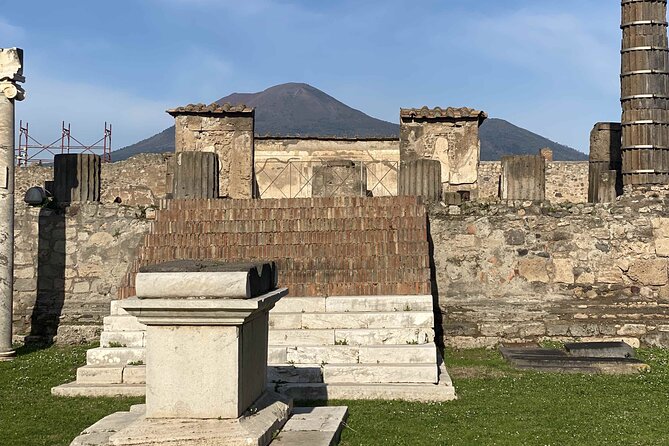
Your journey continues at Santuario di Apollo, which stands out as Pompeii’s earliest known place of worship. Reconstructed and decorated over the centuries, the site showcases a blend of architectural styles, revealing how religious practices evolved in the city. Visitors get to see remnants of its original construction, offering insights into spiritual life in Pompeii.
This stop provides a glimpse into Pompeii’s sacred spaces, helping to paint a fuller picture of daily life before the volcanic disaster. Its historical importance is enhanced by the building’s layered architecture, showing rebuilding efforts over time. The tour offers a visual narrative of religious continuity amidst change, adding depth to your understanding of Pompeii’s social fabric.
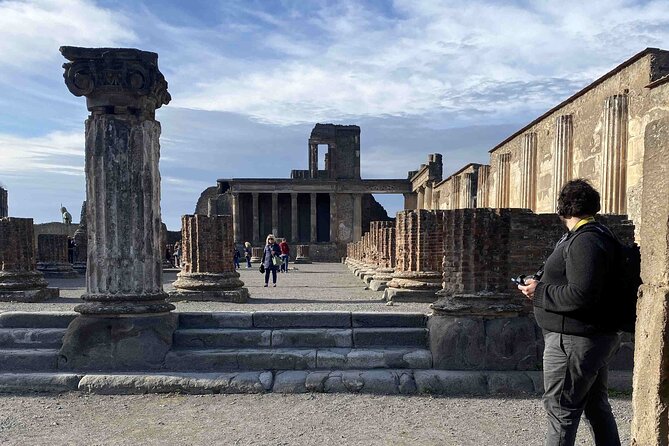
While not a designated stop, Basilica Pompeiana is visible along the route, with remnants of red paint visible on its walls. This structure once served as a hub of civic administration and legal proceedings. Its visual remains contribute to the overall story of Pompeii’s complex social and governmental organization.
The basilica’s presence on the tour helps visitors appreciate the scale and sophistication of Pompeii’s public buildings. Although it’s not a formally narrated stop, its proximity to other landmarks like the forum adds to the understanding of the city’s administrative life. The partially preserved walls and the historical context make it a worthwhile visual point during your walk.
The Forum di Pompei was once the vibrant center of civic, social, and commercial activity. The tour guides you past stepping stones that once kept pedestrians’ feet above muddy streets, illustrating Roman urban planning. This area was the hub for markets, public speeches, and social gatherings.
At this stop, the lively atmosphere of ancient Pompeii becomes tangible. The forum’s layout and remaining structures provide clues about how the city functioned. Walking through this space, you gain an appreciation for Pompeii’s urban design and the daily routines of its inhabitants, making it a key highlight of the tour.
A highlight of this tour is Macellum, Pompeii’s main food market. Here, visitors explore the richly decorated homes and mosaics, and see carbonized loaves of bread that survived the eruption. This insight into daily life shows how Pompeii’s residents shopped, socialized, and prepared food.
The market’s well-preserved mosaics and the carbonized food items serve as a window into Roman culinary habits. The social aspect of the Macellum demonstrates the importance of marketplaces as community gathering spots. This stop offers tangible connections to the everyday routines of ancient Pompeii’s residents.
While in Pompeii, here are other experiences we've covered
The House of the Faun is one of Pompeii’s most famous residences, once home to a wealthy family. Its large size and luxurious details, including intricate mosaics, reveal the lifestyles of Pompeii’s affluent class. The tour features the house’s lavish decorations and architecture, illustrating Roman wealth.
Exploring this residence provides insight into the material culture of Pompeii’s upper classes. The preserved artworks and spacious rooms underscore the city’s prosperity before the eruption. It’s a key site for understanding social hierarchies and domestic life in ancient Pompeii.
The House of the Vettii offers a glimpse into the lives of freed slaves who became property owners. Its well-preserved frescoes depict mythological scenes, providing a vivid picture of Roman artistic tastes. The tour explains the significance of the house’s ownership history and its artistic features.
This site illustrates social mobility in Pompeii, showcasing how freed slaves could attain wealth and status. The frescoes and decoration reflect the artistic trends of the time, making it a fascinating stop for those interested in Roman art and social history.
The Thermopolium functions as an ancient fast-food restaurant, offering insights into Pompeii’s culinary practices. It showcases the types of food served and social interactions around food consumption. Nearby, the Lupanare (brothel) features frescoes that reveal aspects of Pompeii’s social and sexual life, including depictions of Greek and Oriental prostitutes.
These stops highlight the everyday social experiences of Pompeii residents. The thermopolium’s remains show how Romans ate on the go, while the brothel’s artwork uncovers attitudes towards sexuality and social norms. Both sites add a layer of understanding to Pompeii’s social fabric.
The Teatro Grande and Teatro Piccolo are the two main theatres in Pompeii, showcasing the city’s love for entertainment. The larger theatre hosted gladiator shows and public spectacles, while the smaller theatre was used for poetry readings and plays. The tour emphasizes Pompeii’s vibrant cultural scene.
Standing in these theatres, visitors get a sense of the social importance of performance arts. The architecture and preserved seating areas speak to the significance of entertainment in Roman urban life. The tour culminates at Quadriporticus of the theatres, a grand gathering space that underscores Pompeii’s lively public culture.
The tour ends at the Quadriporticus of the theatres, where the story of Pompeii’s long history—its rise, fall, and rediscovery—comes together. This structure acts as a monument to Pompeii’s resilience, its ruins now a vital archaeological treasure. The narrative of rediscovery highlights ongoing efforts to preserve and understand this ancient city.
This final stop encapsulates the significance of Pompeii as a cultural and historical symbol. The tour’s storytelling underscores how the city’s ruins continue to reveal secrets about Roman life, and how modern efforts keep its legacy alive. It leaves visitors with a comprehensive view of Pompeii’s enduring importance.
This self-guided tour is available online via the VoiceMap app, which provides access to audio guides, maps, and geodata offline. It begins at the Archaeological Park of Pompeii, with the exact starting point detailed in instructions after booking. The tour is private, with only your group participating, preserving a personalized experience.
Tour hours extend from 12:00 AM to 11:59 PM daily between January 25, 2024, and June 18, 2026. It’s recommended to book 14 days in advance for better availability. Remember, tickets to access the site must be purchased separately on-site or online, as this tour does not include entry.
The tour’s value lies in its flexibility and detailed narration, perfect for independent travelers who want to control their pace and revisit specific sites as desired. Its positive review and 5-star rating emphasize the expertise of the narration and the comprehensive coverage of Pompeii’s history.
This self-guided audio tour offers a detailed, flexible way to explore Pompeii’s archaeological sites without the rigidity of a group tour. It’s particularly suitable for those comfortable with using an app and eager to learn at their own pace. The narration covers a variety of iconic sites, from sacred spaces and residences to public markets and entertainment venues.
While it doesn’t include site admission, the $19.99 price point and lifetime access make it a good value for those who want to maximize their understanding of Pompeii. The detailed stops and expert narration make it a practical choice for history buffs and independent explorers alike. Just remember to purchase your entry tickets separately to fully enjoy the experience.
Does this tour include entry into Pompeii?
No, the tour provides audio guidance but does not include tickets. Entry tickets can be purchased separately for €19.
What devices do I need for this tour?
You need a smartphone compatible with the VoiceMap app and headphones to listen to the narration offline.
How long does the tour take?
The tour lasts approximately 1 hour 15 minutes to 1 hour 30 minutes, depending on your pace and time spent at each stop.
Can I start this tour at any time?
Yes, the tour is available anytime between 12:00 AM and 11:59 PM, and you can start it whenever you like after booking.
Is this tour suitable for all ages?
Most travelers can participate, but familiarity with using smartphone apps is recommended for a smooth experience.
How do I access the tour after booking?
Once booked, you’ll receive instructions and a unique code to download the tour via the VoiceMap app, with directions to the starting point.
Can I revisit the tour later?
Yes, the access is lifelong, allowing you to revisit and re-listen at your convenience.
What are some highlights of this tour?
You will see Macellum, House of the Faun, Lupanare, Teatro Grande, and explore Pompeii’s public baths and marketplaces—each offering a window into ancient Roman life.
Is there anything I should prepare before the tour?
Ensure your device is charged, tickets to the site are purchased separately, and you have headphones for clear listening.
What sets this tour apart from guided group tours?
Its self-guided format offers flexibility, lifetime access, and in-depth narration, ideal for those who prefer exploring at their own pace and convenience.