Physical Address
304 North Cardinal St.
Dorchester Center, MA 02124
Physical Address
304 North Cardinal St.
Dorchester Center, MA 02124

Explore Philadelphia’s Civil War history with this 2-hour walking tour focusing on the 1863 Confederate invasion scare, led by expert guides for $50 per person.
The General Lee Attacks Philadelphia An Alternative History Tour offers a unique glimpse into a pivotal moment of American history. For $50, you get an approximately 2-hour walking experience that takes you through Philadelphia’s key historic sites while exploring what could have happened if the Confederates had succeeded in their 1863 Pennsylvania invasion. This tour is perfect for history buffs eager to understand the “what ifs” of the Civil War, with a focus on logistical challenges and leadership decisions that kept the city and nation from collapse.
This isn’t a typical sightseeing walk. Instead, it treats history as a live crisis scenario, led by an expert guide who scrutinizes critical moments and hidden details often overlooked in standard tours. The mobile ticket format ensures convenience, and the tour’s duration fits well into a busy schedule, making it an engaging blend of education and exploration for those interested in Philadelphia’s role during the Civil War.
Interested in history? Here are other past-focused experiences we've examined in Philadelphia
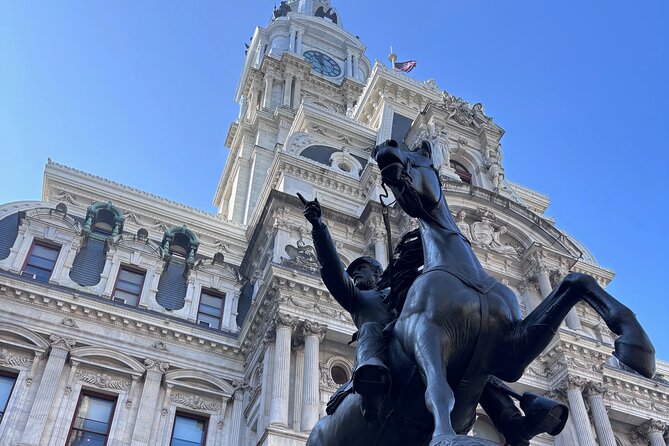
The tour begins at Philadelphia City Hall, where the massive statue of General George B. McClellan stands prominently. Here, the guide offers a detailed analysis of the Union’s command structure and highlights Philadelphia’s logistical strength during 1863. This first stop sets the tone for understanding how the city prepared for—or feared—an invasion. It’s a free stop, but its significance is in the context of the civil defense and leadership decisions that shaped the city’s response.
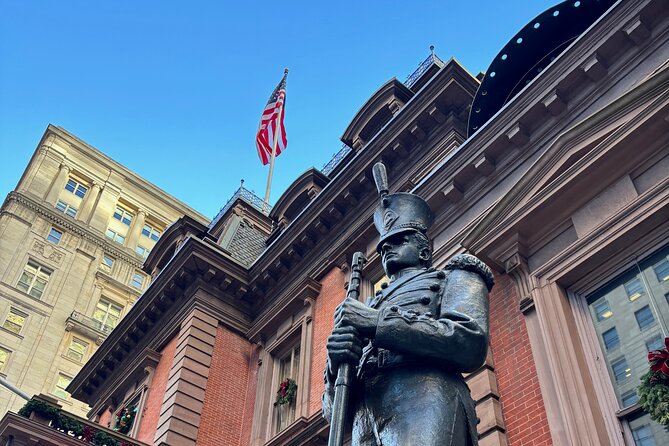
Next, the tour visits the Union League of Philadelphia, an elegant French Renaissance-style clubhouse founded in 1862. While the admission isn’t included, this site reveals how the Union’s war effort was financially supported and highlights the importance of Philadelphia’s contribution to the Civil War. The Union League became an essential institution for political mobilization and public support, making it a crucial piece of the city’s wartime fabric.
The Philadelphia Sketch Club on Camac Street is a significant stop to understand civilian participation in wartime efforts. Walking down “Little Club Row”, visitors learn about the Great Central Fair and how art exhibitions and civilian initiatives helped sustain morale and fundraising. This stop emphasizes how civilian art and community efforts played supportive roles during a time of crisis and showcases Philadelphia’s cultural resilience.
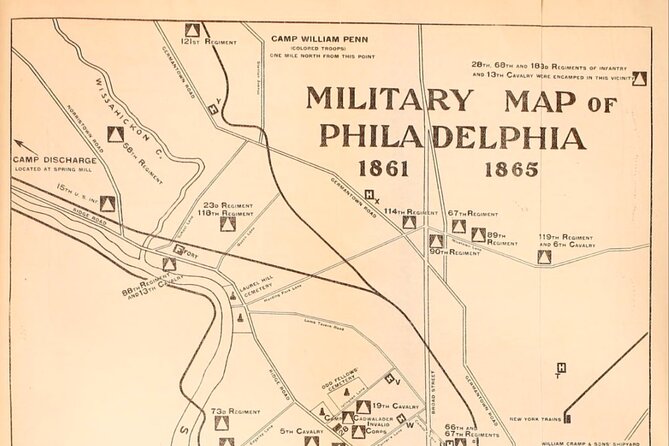
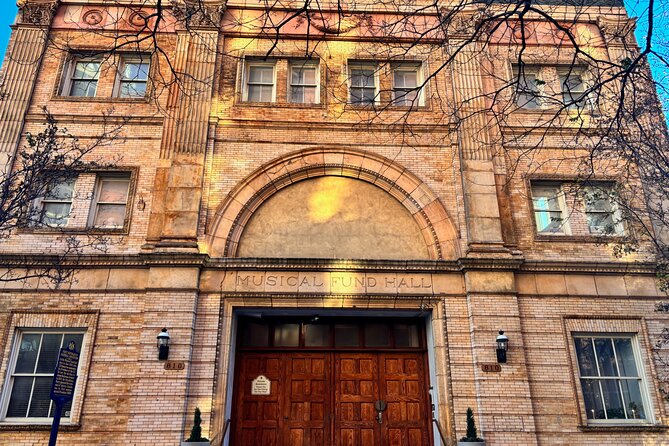
At 808 Locust Street, the group observes the Musical Fund Hall, historically a hub for political activity. Notably, it hosted the first Republican National Convention in 1856. The guide discusses how public spaces like this contributed to cultural mobilization and political debates during the Civil War era, illustrating Philadelphia’s active civic life that helped shape national politics.
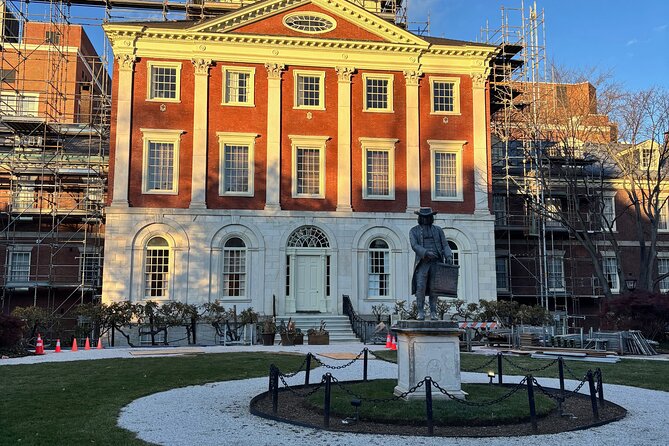
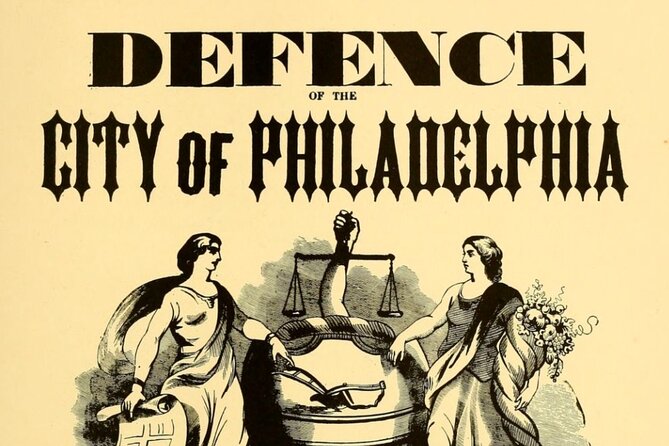
A walk through the Physic Gardens at Pennsylvania Hospital offers insights into the city’s medical infrastructure. As the oldest hospital in the U.S., during the 1860s, it served as a medical hub facing immense logistical and moral dilemmas. This stop explores medical care challenges during wartime and the role of Philadelphia’s healthcare system in supporting soldiers and civilians alike.
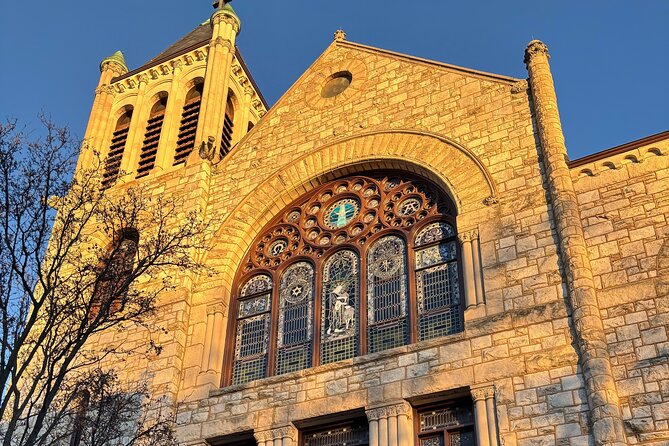
The tour’s next stop is Mother Bethel A.M.E. Church, the oldest African American-owned property in the U.S. that remains in continuous ownership. Here, the guide highlights the Black community’s vital role in Philadelphia’s Civil War efforts, including recruitment of Black soldiers and civil rights activism. It’s a compelling reminder of Philadelphia’s diverse contributions to the Union cause.
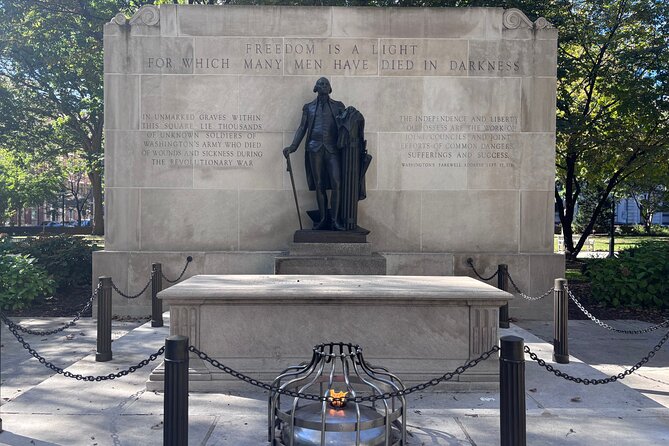
At Washington Square, visitors see the Tomb of the Unknown Soldier and learn about its history as a mass grave for Revolutionary War soldiers. The stop underscores the continuity of sacrifice across generations and links the Revolutionary War to the Civil War, emphasizing Philadelphia’s ongoing commitment to national service and remembrance.
The tour concludes at Independence Hall, the birthplace of the United States. Here, the guide connects the chaos of 1863 back to the promises of 1776, illustrating how the Civil War tested and ultimately forged a stronger Union. While the tour doesn’t include admission, standing in the shadow of the Liberty Bell and Independence Hall provides a powerful backdrop to reflect on America’s resilience.
The meeting point is at Philadelphia City Hall at 1400 John F. Kennedy Blvd, making it accessible via public transportation. The group size is limited to 12 travelers, allowing for a more personalized and engaging experience. The tour ends at the back of Independence Hall, at 6th and Sansom Streets, making it easy to continue exploring or return via public transit.
Unlike typical history tours, this experience emphasizes “what ifs” and scenario analysis of Philadelphia’s potential fall during the Civil War. The expert guide plays a crucial role in analyzing leadership decisions and logistical details, making it ideal for those who want a thought-provoking perspective on the Civil War era. The free cancellation policy adds flexibility, and the cost of $50 offers good value for the depth of insight provided.
This tour offers a focused, detailed exploration of Philadelphia’s role during a critical Civil War crisis. Its accessible locations and engaging narrative style make history feel immediate and relevant. It’s especially suited for visitors interested in American history, Civil War strategies, and Philadelphia’s civic resilience.
However, the 2-hour format and small group size mean that it is more about analysis than extensive sightseeing. It does not include admission to all sites, but the stops are thoughtfully chosen to maximize historical impact.
For those seeking a thoughtful, scenario-based journey through Philadelphia’s wartime past, this tour provides a unique perspective that combines site visits and critical discussion.
Is this tour suitable for all ages?
Yes, most travelers can participate, and it’s designed to be accessible.
Are there any physical requirements?
The tour involves walking and standing for the duration, but no specific physical restrictions are mentioned.
What if the weather is bad?
Since the experience requires good weather and is outdoors at multiple stops, poor weather could cause cancellations or rescheduling, with options for a full refund or a different date.
Does the tour include tickets to any sites?
No, tickets are not included for most stops, except for Pennsylvania Hospital, where admission is part of the experience.
How long is the tour?
It lasts approximately 2 hours, covering around eight stops with brief visits.
Can service animals join the tour?
Yes, service animals are permitted.