Physical Address
304 North Cardinal St.
Dorchester Center, MA 02124
Physical Address
304 North Cardinal St.
Dorchester Center, MA 02124

Discover Lyon's WWII and Resistance history with this engaging audio-guided walking tour. Explore key sites, learn compelling stories, and navigate offline for 3-4 hours.
Exploring Lyon through its WWII and Resistance history becomes an accessible and immersive experience with this self-guided audio tour offered by Trippy Tour Guide. For $12.99 per person, travelers receive a comprehensive 3 to 4-hour itinerary that guides them through some of the city’s most significant sites, all with a fully offline map and more than 30 narration points. The tour is designed for individual groups, making it an ideal choice for those who prefer a flexible schedule and wish to learn at their own pace.
The tour covers a wide range of locations, from historic streets and squares to museums and landmarks, each with fascinating stories of resistance, heroism, and sacrifice. It is especially suited for history enthusiasts, curious visitors, and anyone interested in understanding Lyon’s role during WWII. The self-guided audio format offers the convenience of exploring Lyon without the need for a large group or guided tour, while providing plenty of insightful details.
 1 / 7
1 / 7 2 / 73 / 7
 4 / 7
4 / 7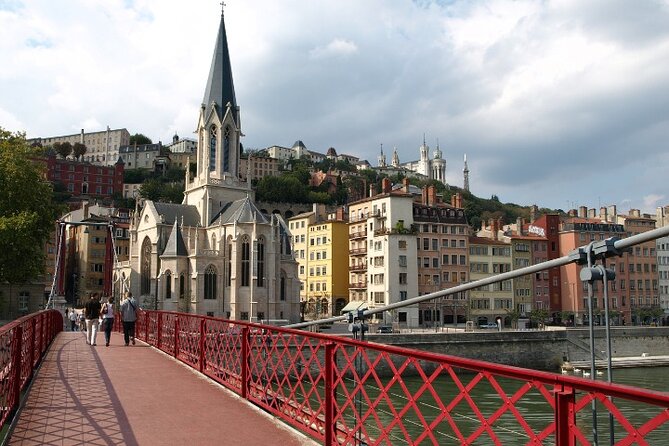 5 / 7
5 / 7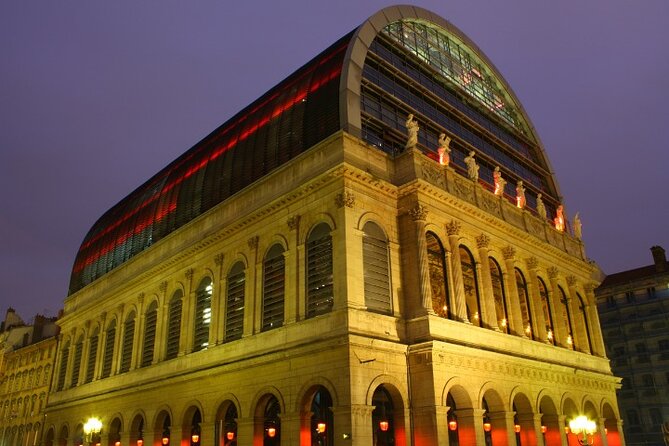 6 / 7
6 / 7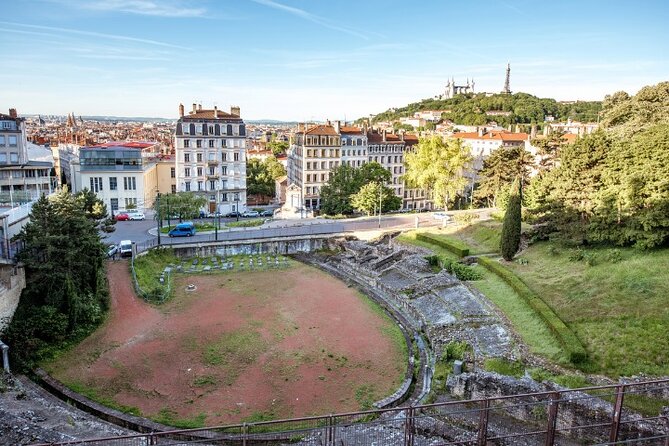 7 / 7
7 / 7
This self-guided tour begins at Parking7 Rue Jeanne Hachette, a convenient location near public transportation. Here, travelers receive a mobile ticket that unlocks access to the Trippy Tour Guide app, which contains the audio guide and offline map. The flexibility of the start time means visitors can plan their experience according to their schedule, with the tour available every day from 9:00 AM to 8:00 PM.
The tour concludes at Croix-Paquet, a central point that makes it easy to continue exploring Lyon or return to accommodations. Since the tour is designed to be completed in 3 to 4 hours, it suits those who want an in-depth yet manageable sightseeing experience.
Appreciate having local insight? Here are other guided experiences in Lyon we've examined
The journey begins at 9 Cours Gambetta, where six young Resistance figures were arrested by the Gestapo in 1944. Their bravery and sacrifice symbolize youthful defiance against Nazi oppression. Visitors find this spot significant as a reminder of the risks Resistance members faced, and the site is marked as a place of remembrance.
The Centre d’Histoire de la Résistance et de la Deportation (CHRD) is housed in the former Gestapo headquarters. It preserves testimonies, artifacts, and stories from Lyon’s Resistance fighters, making it a central stop for understanding the raw, unfiltered experiences of those who fought for justice during World War II. The museum’s location adds a tangible sense of history, transforming these walls into a powerful narrative of resilience.
The Pont Gallieni spans the Rhône River and served as a critical crossing point during the war. Its tranquil current belies its past as a route for secret missions and Resistance activity. Today, it stands as a peaceful witness to Lyon’s wartime efforts, linking the city’s past and present in a single glance.
While in Lyon, here are other experiences we've covered
Place Carnot features the Monument aux Morts, paying tribute to Lyon’s fallen soldiers from both World Wars and the Resistance. This site remains central to Liberation Day and VE Day commemorations. Visitors appreciate its role as a place of remembrance and national pride.
Rue Victor-Hugo, now a bustling shopping street, was once a vital artery for Resistance communication. Secret messages, underground plans, and acts of bravery took place here, hidden behind everyday storefronts. The tour highlights how ordinary streets became extraordinary sites of defiance.
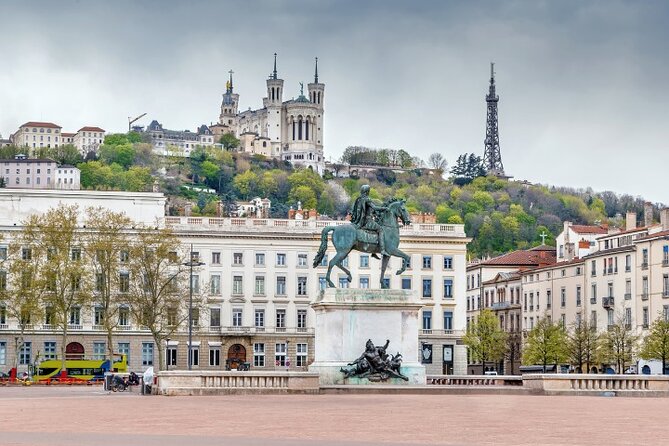
Place Bellecour, the largest open square in Lyon, was heavily affected during WWII. It was a site of arrests, occupation, and covert Resistance activities. Today, it stands as a lively tribute, where history and modernity blend seamlessly.
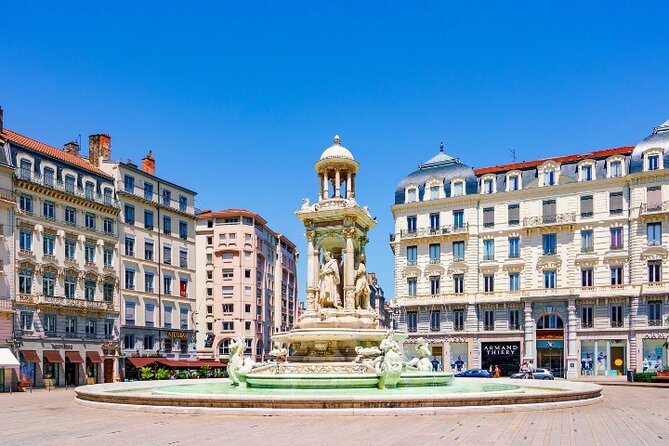
Place des Jacobins served as a Resistance hub, where underground presses and rescue operations took place. Now a peaceful square, it echoes the secret bravery of the Lyonnais who fought against occupation from this historic center.
Église Saint-Nizier is a Gothic landmark sheltering relics and surviving war damage. It also played a role in Lyon’s Resistance, hosting protests and acts of defiance, including a notable demonstration in 1975. The church stands as a symbol of resilience and spiritual resistance.
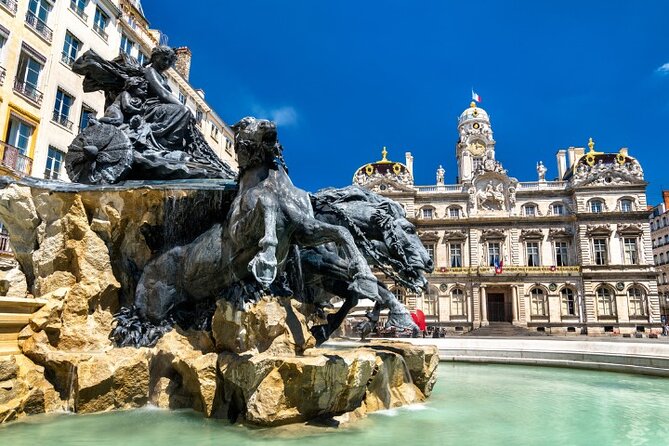
Place des Terreaux combines beauty with history, having been a covert Resistance meeting point. Its fountains and sculptures now mask stories of underground presses and silent acts of defiance that contributed to Lyon’s liberation.
Hôtel de Ville de Lyon served as a silent witness during WWII, where Resistance activities occurred behind its grand façade. Today, it symbolizes the civic pride and resilience of the city, a site of both historical significance and celebration.
This small street bears a plaque commemorating 86 Jews arrested by the Gestapo in 1943. Its quiet presence marks one of Lyon’s darkest moments with respect and remembrance, emphasizing the city’s commitment to never forget.
Walls here hide the site where General Delestraint was arrested in 1943, representing a pivotal moment in Lyon’s Resistance. The quiet surroundings echo stories of betrayal and courage that shaped the city’s wartime narrative.
A modest fountain scarred by wartime damage honors Auguste Burdeau and Lyon’s enduring resilience. A missing statue and engraved scars tell stories of loss, remembrance, and hope, emphasizing the city’s ability to recover.
This Roman Amphitheatre links Lyon’s ancient past to its wartime spirit. It echoes stories of faith, Christian martyrdom, and defiance, standing as a timeless witness to resilience spanning centuries.
The Cour des Voraces is one of Lyon’s most iconic traboules, with a history of silk worker revolts and WWII resistance activities. Its stairways and underground passages served as escape routes and secret strongholds, representing the unbreakable spirit of Lyon.
The self-guided nature of this tour means travelers have the freedom to explore at their own pace, with audio narration providing context at each site. The offline maps ensure no need for Wi-Fi, making navigation straightforward even in areas with limited signal.
Since most stops are free, the only costs are the $12.99 ticket and optional museum admissions, such as the CHRD. The tour fits well into a typical half-day schedule, with flexibility to pause or revisit locations. It is suitable for anyone with a basic level of mobility, and the easy meeting point adds to its convenience.
According to the only available review, the audio narration is praised for being clear, well-researched, and offering a local perspective. The detailed directions help visitors find both prominent and hidden sites, adding depth to the experience.
The tour ends at Croix-Paquet, a central location where visitors can easily access other parts of Lyon. Whether continuing sightseeing or heading back to accommodations, this finish point completes a comprehensive journey through Lyon’s WWII and Resistance history.
This self-guided tour offers a compelling way to experience Lyon’s wartime history. Its affordable price, combined with detailed narration and offline maps, provides excellent value for those interested in history, resistance stories, and urban exploration.
While the free stops keep costs low, the museum visits like CHRD add depth for those wanting detailed exhibits. The flexibility makes it suitable for independent travelers who prefer pacing their own adventure.
This tour delivers a meaningful and accessible way to understand Lyon’s role during WWII, highlighting stories of heroism and resilience embedded in the city’s streets. It’s perfect for history buffs, curious explorers, and anyone eager to see Lyon through a different lens.
Is this tour suitable for all ages?
Yes, since it is a self-guided walk with accessible locations, most ages can participate comfortably, provided they can walk and listen to the narration.
Do I need internet access to participate?
No, the offline map and narration mean no internet or data is required during the tour, making it convenient for on-the-go exploration.
Can I start this tour at any time?
Yes, the tour is available every day from 9:00 AM to 8:00 PM, allowing flexibility for planning your visit.
Are there any additional costs involved?
Most stops are free. Optional museum visits or special exhibits, like CHRD, may have entrance fees, but the main tour itself costs $12.99 per person.