Physical Address
304 North Cardinal St.
Dorchester Center, MA 02124
Physical Address
304 North Cardinal St.
Dorchester Center, MA 02124

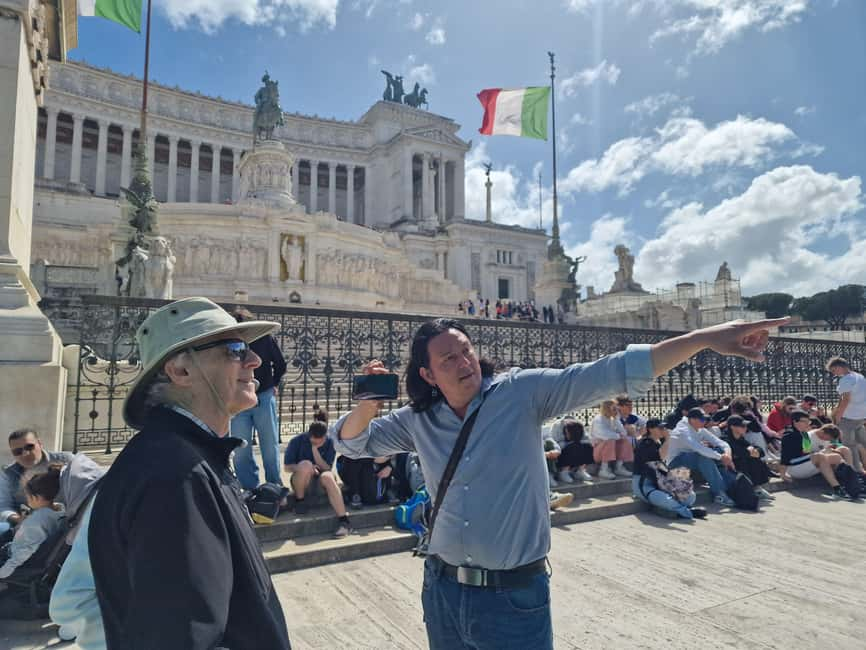
Discover Rome’s WW2 history on a 2.5-hour guided walking tour exploring key sites from Fascism to liberation, led by knowledgeable guides in a small group setting.
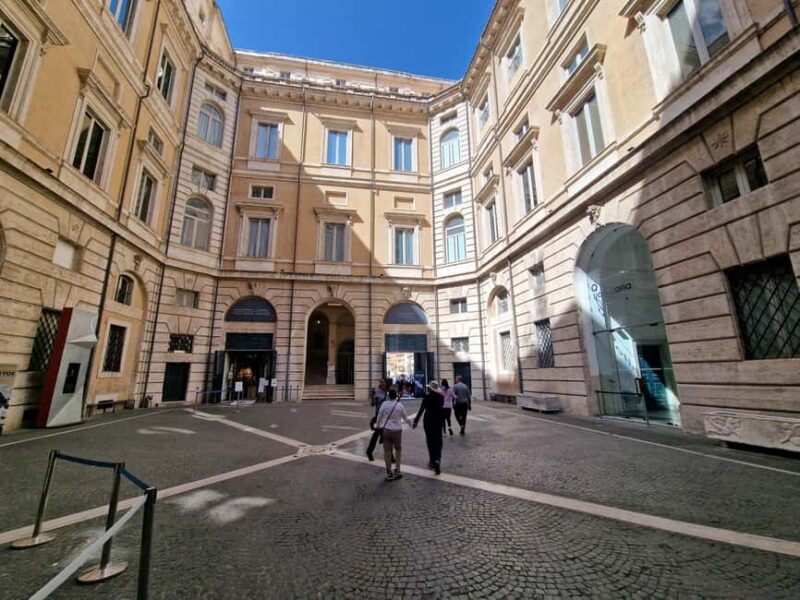
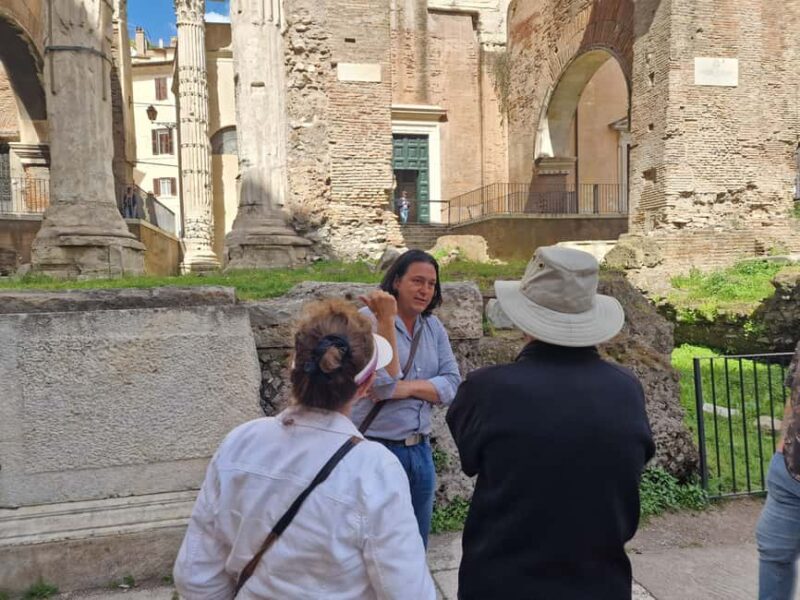
The tour begins near Piazza Venezia, where visitors are greeted in front of a cafe beside Trajan’s Column. This central location acts as the starting point for uncovering Rome’s complex WW2 history. From here, the guide points out signs of the era that often go unnoticed, setting the tone for a journey through Roman history intertwined with Fascist symbols and memorials.
In this area, the focus is on Piazza Venezia, famously known as the location where Mussolini addressed thousands from his balcony during Italy’s Fascist rule. The guide explains how this square served as the political hub of Fascist Italy and how the architecture and monuments reflect that period. The proximity to Trajan’s Column also offers a glimpse into how Mussolini’s obsession with Ancient Rome influenced his architectural choices.
If you're drawn to exploring Rome on foot, we've looked into these other walking experiences
Moving from Piazza Venezia, the tour proceeds to the Ancient Roman Forum, where the influence of Mussolini’s admiration for Rome’s imperial past is evident. The guide highlights buildings and monuments that were either constructed or modified during Mussolini’s regime to reinforce his vision of Rome as the center of a new empire.
This stop provides insight into how Fascist ideals left marks on Rome’s ancient sites, blending history with political symbolism. The guide discusses the emperor-like ambitions of Mussolini and how they shaped the city’s landscape, offering a different lens on what is often seen as just an ancient archaeological site.
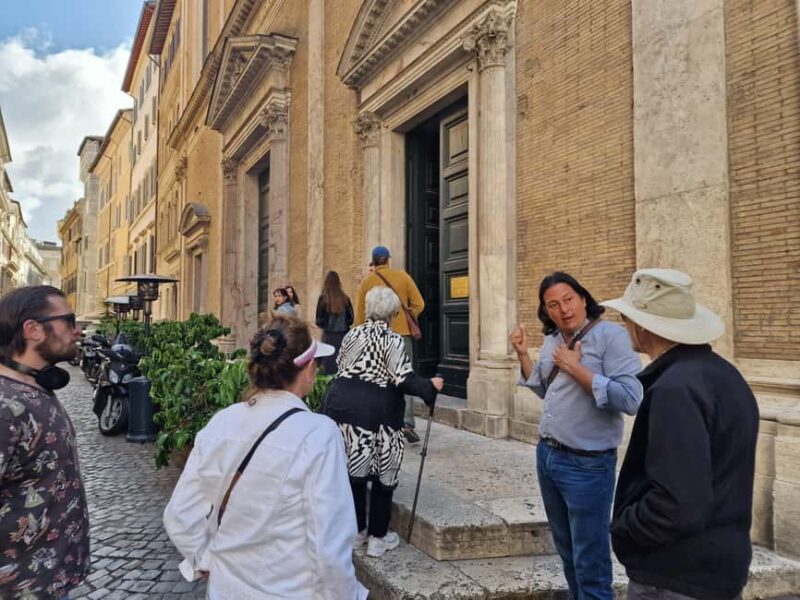
Next, the tour takes participants into the Jewish Ghetto, where the history of Rome’s Jewish community during WW2 is central. The guide discusses how the community was affected by the era’s political upheavals, including Nazi occupation and the persecution of Jews.
This stop emphasizes the resilience of local Jewish residents and their cultural contributions amid adversity. The guide points out specific memorials and sites that commemorate those who suffered during the war, subtly woven into the historic streets of the Ghetto.
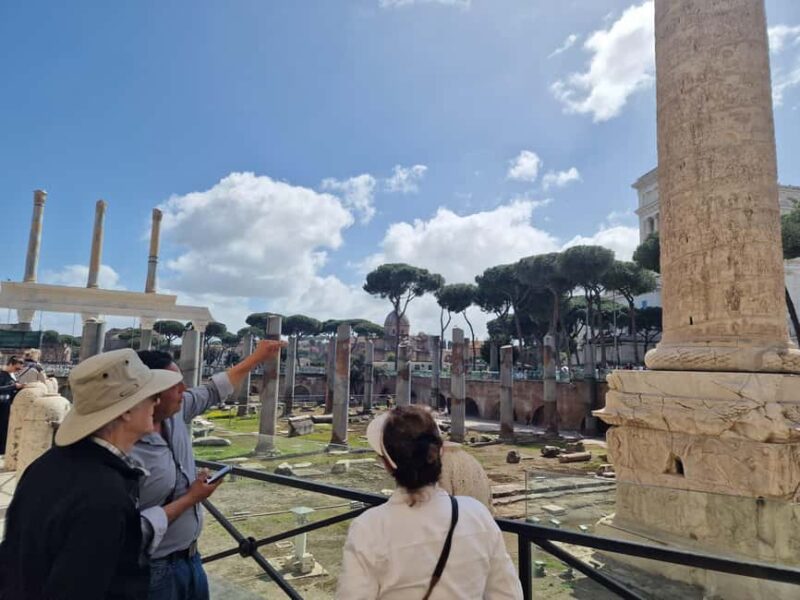
The route then moves through Piazza Navona, one of Rome’s most lively squares, which also bears traces of its Fascist past. The guide discusses how the square and its surrounding buildings were influenced by the political climate of the era.
From there, the group heads towards the Tiber River, where the guide explores the Church’s position during the Fascist and WW2 periods. This discussion sheds light on the complex relationship between religious institutions and the political powers of the time, including their responses to Nazi occupation and liberation.
More Great Tours Nearby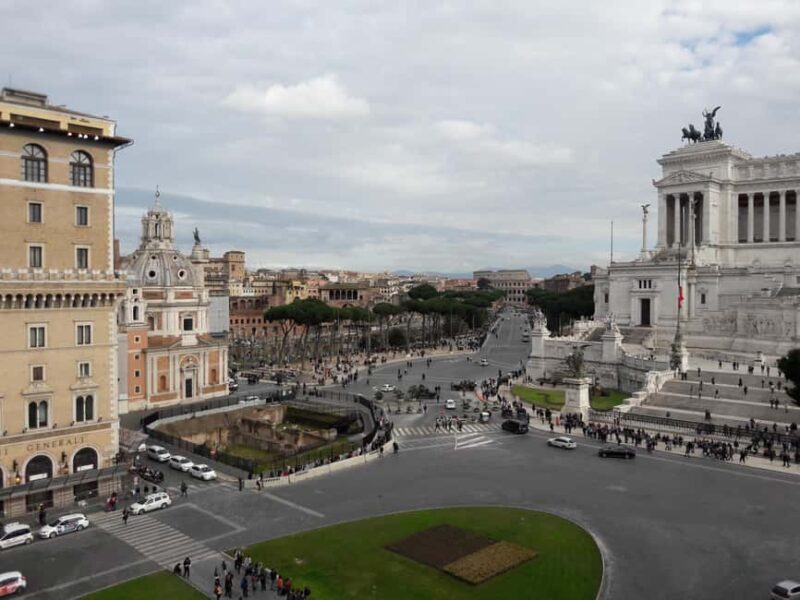
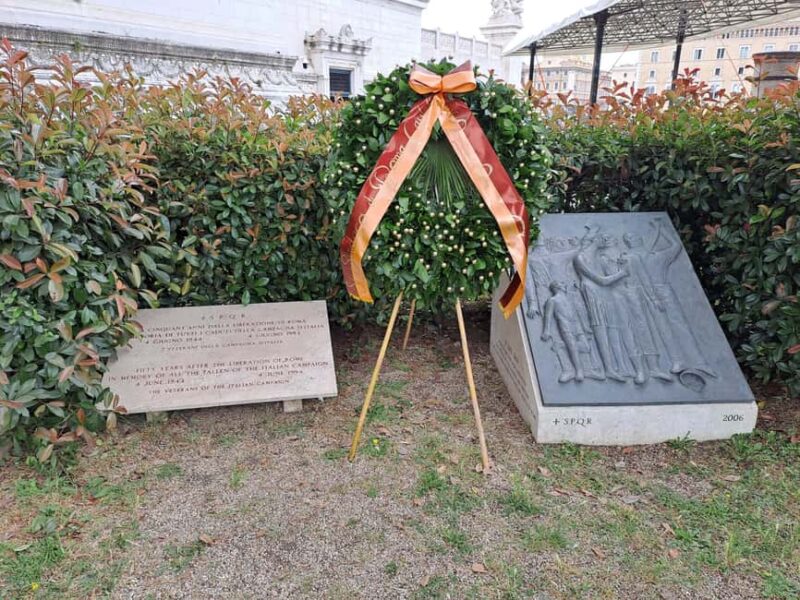
The tour concludes with a powerful story about June 1944, when Nazi forces fled Rome and Allied troops entered the city. The guide describes the scenes of mass jubilation and the significance of this event as a turning point in Rome’s history.
This moment is presented with careful detail, emphasizing how the city’s streets and monuments became symbols of freedom after nearly nine months of Nazi occupation. The story of liberation ties together the historical sites visited and highlights Rome’s resilience during WW2.
The meeting point is clearly defined: in front of a cafe at Trajan’s Column, with the guide holding an orange sign with a lion head for easy identification. The coordinates provided ensure precise location details, making it simple to find the starting point.
The tour operates in English and is suitable for those with wheelchair access needs. It lasts for 2.5 hours, making it a manageable yet enriching experience for most travelers. The small group size of up to 10 participants ensures plenty of opportunity for questions and personalized attention.
Participants are advised to bring bottled water, sunscreen, hat, and umbrella, depending on the weather. Comfortable walking shoes are essential, as the tour involves walking through Rome’s historic streets. Inside churches, a shoulder cover is recommended, especially during warmer months, to respect local customs.
The tour proceeds in all weather conditions, unless certain sites are closed for safety reasons. The activity adheres to current COVID-19 regulations set by the Italian government, ensuring safety and compliance.
Booking options include the ability to reserve now and pay later, offering flexibility for travelers’ plans. The full refund option is available if canceled up to 24 hours in advance, providing peace of mind. This flexible approach makes it easier to include the tour in a travel itinerary without financial risk.
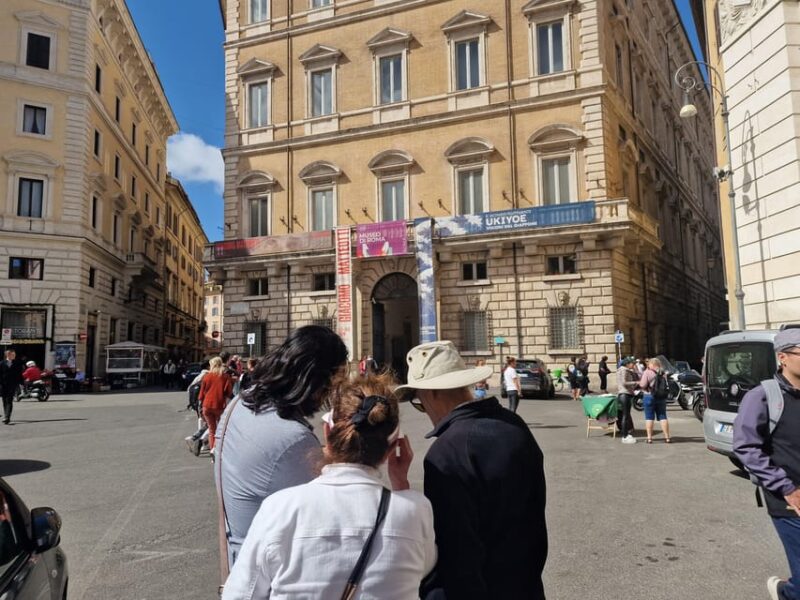
The tour consistently receives 5 out of 5 ratings from 11 reviews, with many reviewers highlighting the knowledge and enthusiasm of the guide. Guides like James are praised for their depth of knowledge and ability to answer questions thoroughly, enhancing the experience.
Guests appreciate how the guides point out small details and memorials that often go unnoticed, enriching the understanding of Rome’s WW2 history. The personalized approach, especially in small groups, means ample time for questions, making each tour uniquely informative.
Although this tour is focused specifically on WW2 and Fascist Italy, other activities available in Rome include visits to the Colosseum, Vatican, and underground crypts. This tour offers a distinctive perspective by connecting Rome’s iconic landmarks with WW2 history, providing a deeper understanding of how the city’s past shapes its present.
This 2.5-hour guided walk offers a detailed look at Rome’s WW2 history from a unique angle, emphasizing political symbolism and local resilience. The focus on fascist architecture, Jewish community history, and liberation stories makes it a compelling choice for history enthusiasts.
The small group size and knowledgeable guides ensure an engaging experience, well-suited for travelers who want to deepen their understanding of Rome beyond its ancient ruins. The tour’s flexibility and clear logistics make it a practical addition to any Roman itinerary.
While the tour covers a lot of ground in a short time, it’s best for those prepared for walking and interested in political history. For anyone seeking a thoughtful exploration of Rome’s recent past, this tour provides a meaningful, well-structured experience.
Is the tour suitable for wheelchair users? Yes, the tour is wheelchair accessible.
How long does the tour last? The tour lasts approximately 2.5 hours.
What is the meeting point? In front of a cafe at Trajan’s Column, with the guide holding an orange lion-head sign.
Can I cancel my booking? Yes, you can cancel up to 24 hours in advance for a full refund.
Is there a dress code? Comfortable walking shoes are recommended, and a shoulder cover is advised for inside churches.
What should I bring? Bottled water, sunscreen, hat, umbrella, and suitable clothing for weather conditions.
Are the guides experienced? Yes, guides like James and Paul are praised for their expertise and ability to answer questions thoroughly.
What makes this tour different from other Roman experiences? It specifically focuses on WW2 history, Fascist architecture, and liberation stories, offering a perspective often missing from general tours.
You can check availability for your dates here: